
| The NYC Plus One ADU Program is now open. Eligible homeowners can receive up to $395,000 in construction financing to build a basement apartment, garage conversion, or backyard cottage — and Built by Bob manages the entire process from application to final inspection. This guide covers exactly what the program offers, who qualifies, and how to get started today. |
What Is the NYC Plus One ADU Program?
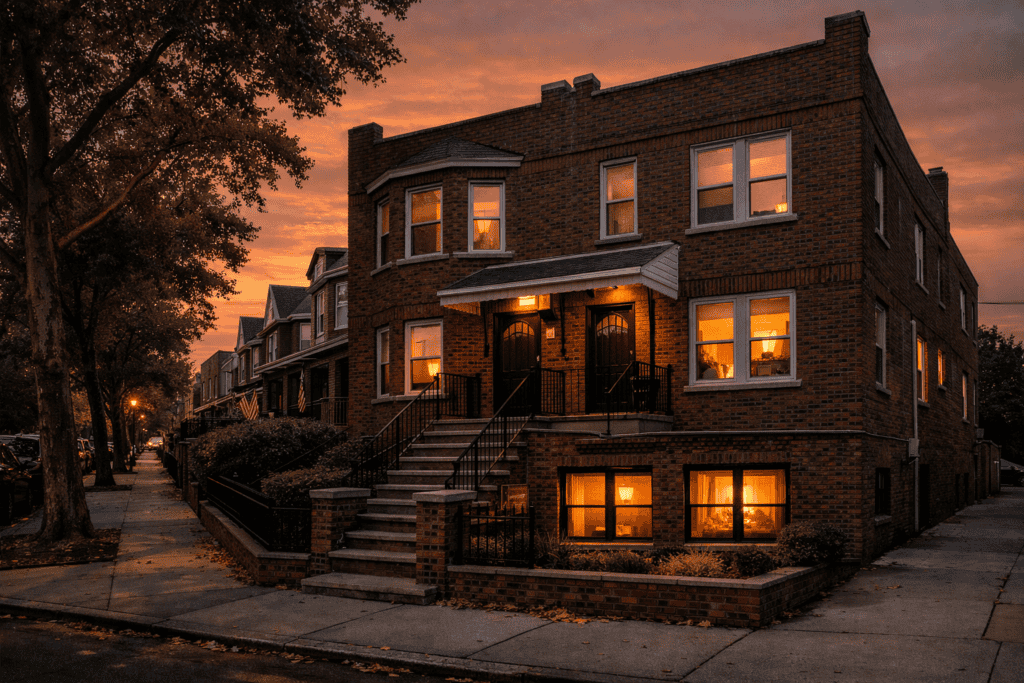
The Plus One ADU Program is a City of New York initiative run by the NYC Department of Housing Preservation and Development (HPD) and funded by NYS Homes and Community Renewal (HCR). It provides eligible homeowners with low-interest and forgivable construction loans to add a second living space — known as an Accessory Dwelling Unit (ADU) — to an existing home.
The program became possible after December 5, 2024, when the NYC Council adopted City of Yes for Housing Opportunity, which formally defined ADUs in the zoning code for the first time — opening eligibility to thousands of previously ineligible properties across all five boroughs.
The program drew over 1,300 interest submissions in its first two weeks. After a pause to secure full funding, it reopened for applications in March 2026 and is actively accepting new applicants. Applications are reviewed on a rolling basis — funding is limited and awarded until exhausted, so earlier applicants have an advantage.
How Much Money Can You Actually Get? (The $395,000 Breakdown)
The $395,000 is not a single check. It is a package of financial tools structured to cover most or all of your construction costs:
| Funding Type | What It Means for You |
| Construction Loan | Covers the cost of building your ADU — paid directly to your licensed contractor |
| Low-Interest Loan | Rate set by HPD at application — typically well below current home equity loan rates; confirm exact rate when you apply |
| Forgivable Loan | If you comply with the 10-year program rules, this portion does not need to be repaid |
| Technical Assistance | Pre-development support, plans review, permit guidance — at no cost to you |
| Max Per NYC Home | Up to $395,000 total (vs. $125,000 outside NYC — the city rate is 3x higher) |
The key rule: you must keep the unit as permanent year-round housing and remain the owner-occupant for the 10-year compliance period for the forgivable portion to be fully forgiven. Short-term rentals (Airbnb, VRBO) are not permitted and will trigger repayment.
Who Qualifies for the NYC ADU Grant?
You likely qualify if all of the following apply:
• Property type: You own a 1- or 2-family home in New York City
• Primary residence: You live in the home as your main address
• Household income: You earn no more than 100% of NYC Area Median Income — approximately $130,000 for a family of 4 in 2026 (confirm current AMI limits at application, as figures update annually via HPD’s income guidelines)
• Available space: You have a basement, garage, backyard, attic, or other convertible area
• Property condition: Your home is free of open DOB violations (or violations directly tied to the ADU work, which can be resolved during construction)
• Flood zone: Properties in high-risk FEMA flood zones may face additional HPD review
| Not sure if you qualify? Built by Bob offers a free in-person property assessment — we check all eligibility criteria on-site at no cost. |
What Counts as an ADU? (4 Types Eligible in NYC)
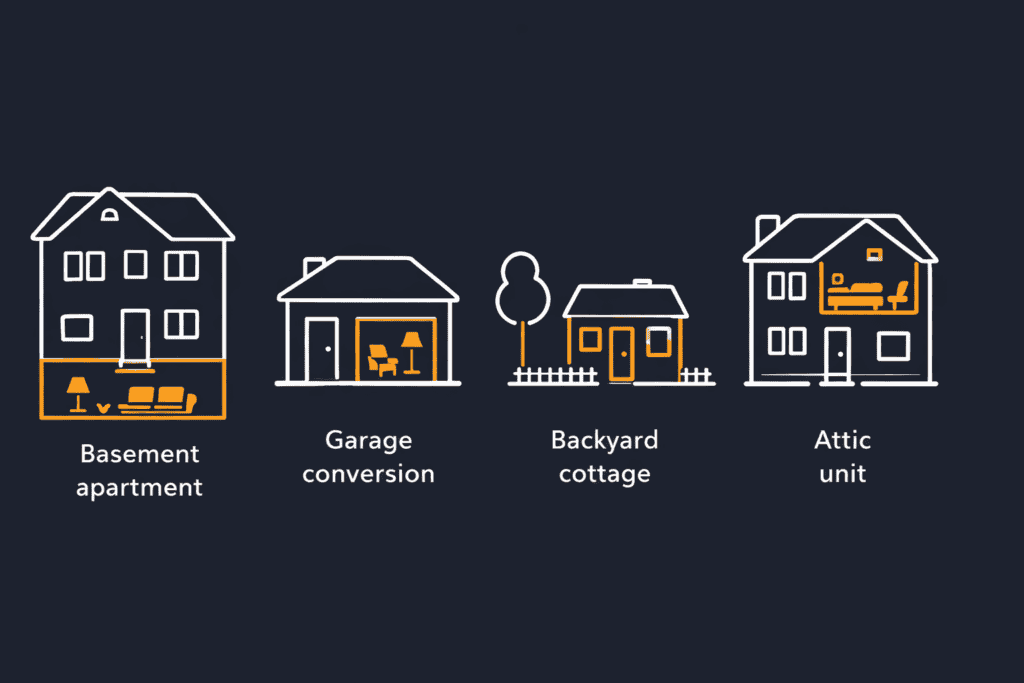
An ADU is a self-contained living unit added to an existing property. Under the Plus One ADU Program, four types are eligible:
Basement Apartment
The most common ADU type in Queens and Brooklyn. Existing basement space is converted into a legal, habitable apartment with proper egress, ventilation, and ceiling height requirements met.
Garage Conversion
Attached or detached garages converted into full living units. Especially common in Southeast Queens and Staten Island, where garage footprints are large enough to support a comfortable one-bedroom layout.
Backyard Cottage (Detached ADU)
A new detached structure built in the rear yard. Requires sufficient lot size and rear yard setback clearance under City of Yes rules. Typically the most expensive ADU type — but also the most valuable long-term rental asset.
Attic or Above-Garage Unit
Upper-level spaces converted into livable units. Requires a structural review and adequate ceiling height. Often overlooked but feasible in many attached homes across Queens and Brooklyn.
Our team evaluates which ADU type is best suited for your specific property during your free site visit. See examples of Built by Bob residential projects.
How to Apply: Step-by-Step (With Built by Bob)

Here is the full process from first interest to finished ADU — and where Built by Bob takes the weight off your plate:
1. Check your eligibility (free). Call us directly or visit our ADU page. We give you a straight answer immediately — no obligation.
2. Submit the HPD interest survey. You complete a short online form on the HPD website. No financial commitment at this stage.
3. HPD site feasibility review. HPD reviews your property. Built by Bob prepares your documentation package in advance to maximize approval odds.
4. Official application + $200 fee. You submit the formal HPD application with a $200 non-refundable processing fee. We guide you through every form.
5. Pre-development and design. Built by Bob produces construction drawings, handles DOB filings, and manages zoning compliance — all included in the program.
6. Construction. Our licensed NYC crew builds your ADU on time and on budget. We manage all inspections through certificate of occupancy.
7. Rent it or house family. Your new unit is legal, permitted, and ready to generate income or house a loved one.
Built by Bob has 10+ years of experience navigating NYC’s DOB permit and filing process across all five boroughs. See our completed projects.
How Much Does Building an ADU Cost in NYC?
Construction costs vary based on ADU type, size, and existing conditions. These are realistic 2026 ranges based on active NYC projects:
| ADU Type | Typical NYC Construction Cost (2026) |
| Basement Apartment | $80,000 – $160,000 depending on size and existing conditions |
| Garage Conversion | $60,000 – $120,000 for attached; higher for detached structures |
| Backyard Cottage | $150,000 – $300,000+ for new ground-up construction |
| Attic Conversion | $70,000 – $130,000 depending on structural work required |
| With the program covering up to $395,000, most Queens homeowners building a basement or garage ADU will pay little to nothing out of pocket — and many receive more in program funding than the actual construction cost. |
Frequently Asked Questions
Is the $395,000 a grant or a loan?
It is a combination of both. The package includes low-interest construction loans and a forgivable loan component. If you remain the owner-occupant and keep the unit as permanent housing for 10 years, the forgivable portion does not need to be repaid — so in practice, most compliant homeowners treat it like a grant with a compliance period. Built by Bob walks you through the exact structure at your free consultation.
Who manages the application — me or Built by Bob?
Built by Bob manages the process from start to finish. You submit the initial HPD interest survey, and from there we handle feasibility documentation, the official application, DOB filings, permits, design drawings, and construction. Your job is to attend the free site visit and sign off at key milestones.
Can I rent the ADU on Airbnb or short-term?
No. The program requires the ADU to be used as permanent year-round housing. Short-term or transient rentals violate the compliance agreement and trigger loan repayment obligations. Long-term market-rate rentals to tenants are fully permitted — and are a common way homeowners use the unit to offset their mortgage.
What if my property has existing DOB violations?
Properties must be free of open violations before funding is released — unless those violations are directly related to the ADU work, in which case they can be resolved during construction. Built by Bob reviews any existing violations during your free property walk and advises on the fastest path to clearance.
I live in Flushing or Queens — does this apply to me?
Absolutely. Queens has one of the highest concentrations of eligible 1- and 2-family homeowners in all of NYC. Built by Bob serves Flushing, Jamaica, Bayside, Forest Hills, Ridgewood, and all surrounding neighborhoods. Many of our consultations are in the Queens area and we are familiar with the specific property types and DOB filing patterns common here.
How long does construction take?
A basement or garage conversion typically takes 4–8 months from permit approval to completion. A backyard cottage or attic conversion may take 6–12 months depending on structural complexity. We provide a firm timeline after your site assessment — and we stick to it.
What does the free consultation actually include?
At the free property assessment, Built by Bob will: (1) walk your property in person, (2) confirm program eligibility on the spot, (3) show you which ADU types are feasible for your home, and (4) give you a ballpark cost estimate with a breakdown of what the city covers. No sales pressure — just straight answers so you can make an informed decision.
| Ready to Check If Your Home Qualifies? Built by Bob is a licensed NYC General Contractor with 10+ years of experience across all five boroughs. We handle the ADU program application, DOB permits, and construction — start to finish. Book your free property assessment today, or learn more about our residential services |