
Tenant improvements (TI) are any construction or renovation work done to a commercial space to make it usable for your business. In New York City, understanding TI is critical — because costs, permits, and timelines can significantly impact your opening and profitability.
What Are Tenant Improvements in NYC?
Tenant improvements (TI) are modifications made to a leased commercial space to meet a tenant’s operational needs. This can range from simple cosmetic upgrades to full structural buildouts.
Tenant improvements are changes made to a commercial space to fit a business’s needs, including walls, electrical, plumbing, and finishes. In NYC, most TI projects require permits and coordination with landlords, contractors, and city agencies.
Common Tenant Improvement Work Includes:
- Demolition of existing structures
- New walls and layout changes
- Electrical upgrades and lighting
- Plumbing and restrooms
- HVAC systems
- Flooring and ceilings
- Custom millwork and branding
- ADA compliance upgrades
Tenant improvements are often part of a larger construction strategy. If you’re planning a full transformation, it’s important to understand the difference between scope levels.
👉 Learn more: interior buildout vs full buildout
What Is a Tenant Improvement Allowance (TI Allowance)?
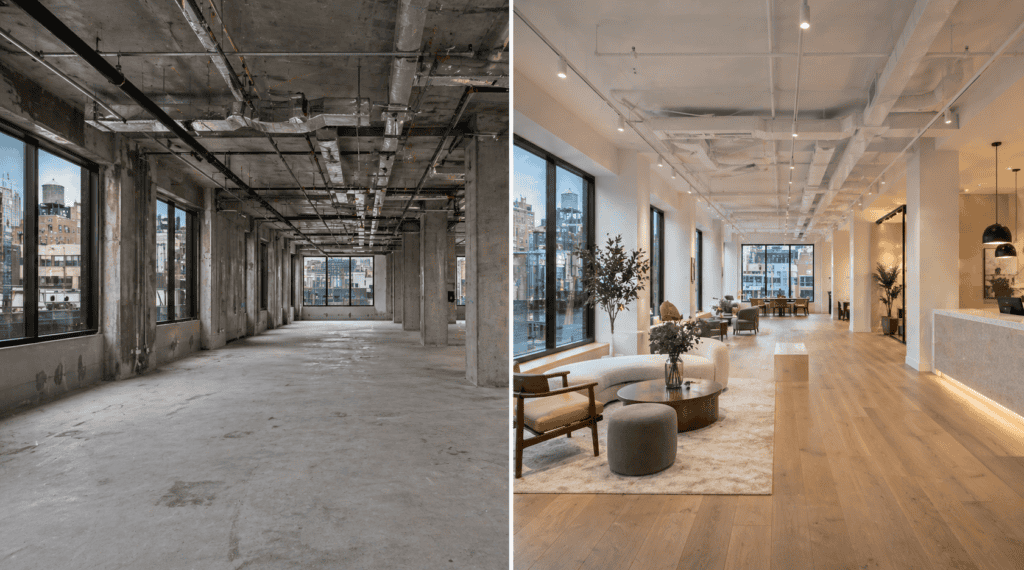
A tenant improvement allowance is the amount a landlord contributes toward building out your space. It’s negotiated in your lease and usually calculated per square foot.
A TI allowance is funding provided by the landlord to offset construction costs. In NYC, this typically ranges from $30–$150 per square foot and is paid as reimbursement after construction is completed.
Common TI Structures:
| Type | Meaning |
| $50/sf allowance | Landlord pays $50 per square foot |
| Lump sum | Fixed contribution amount |
| As-is | Tenant pays everything |
| Turnkey | Landlord builds the space |
💡 Important: TI rarely covers full costs in NYC — always budget the gap.
How TI Allowances Are Paid in NYC
TI allowances are usually reimbursement-based, not upfront cash.
In NYC, tenants typically pay for construction first, then submit invoices and documentation to receive reimbursement from the landlord up to the agreed TI allowance.
Typical Process:
- Tenant hires contractor and funds construction
- Submit invoices + lien waivers
- Landlord reviews documentation
- Reimbursement is issued
Before funding even begins, your project must move through structured stages.
👉 See full breakdown: commercial construction phases
TI Allowance vs Free Rent vs Rent Abatement
Landlords use different incentives to structure deals.
TI allowance covers construction costs, while free rent and rent abatement reduce financial pressure during early business operations.
| Incentive | Purpose |
| TI Allowance | Buildout funding |
| Free Rent | Startup runway |
| Rent Abatement | Reduced cost period |
| Turnkey | No construction risk |
💡 You can negotiate combinations of these.
NYC DOB Permits for Tenant Improvements
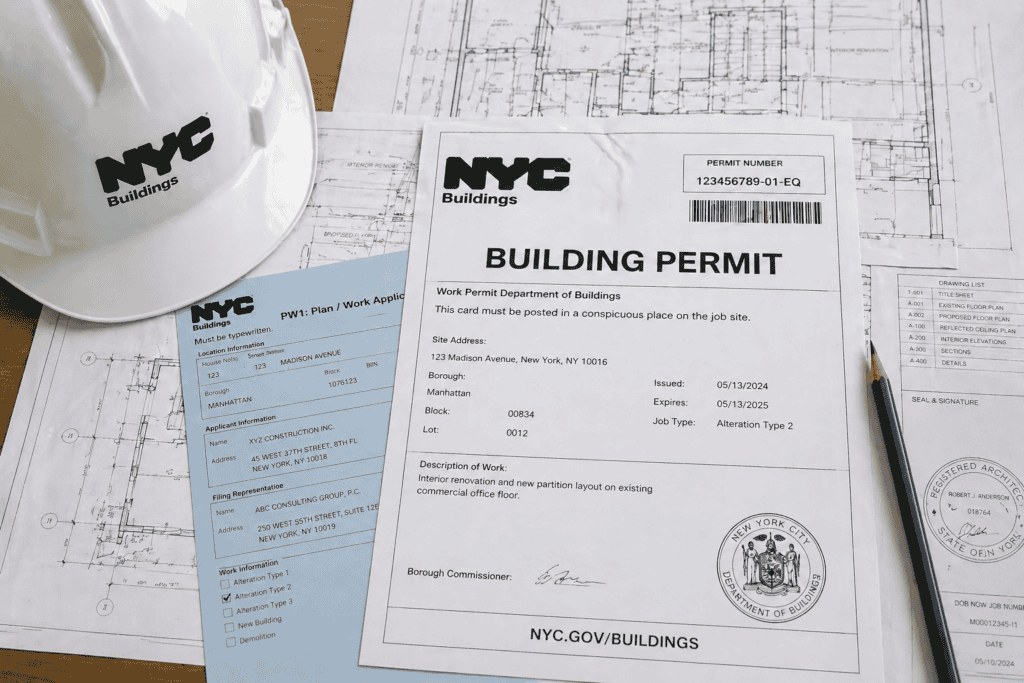
Most TI projects in NYC require permits from the Department of Buildings (DOB).
Any work beyond cosmetic upgrades requires NYC DOB permits, including walls, electrical, plumbing, HVAC, and structural changes.
Requires Permit:
- Layout changes
- Electrical upgrades
- Plumbing modifications
- HVAC systems
- Structural changes
Typically No Permit:
- Painting
- Minor fixture replacement
- Flooring (non-structural)
Many NYC projects use a more efficient approach where design and construction are integrated.
👉 Learn how: design build construction NYC
What Tenant Improvements Cost in NYC
NYC has some of the highest construction costs in the country.
Tenant improvement costs range from $60/sf for basic offices to $350+/sf for restaurants, excluding soft costs like design, permits, and equipment.
Typical Costs:
| Type | Cost per SF |
| Basic office | $60–$100 |
| Retail | $80–$175 |
| Salon/Spa | $100–$200 |
| Restaurant | $150–$350+ |
Additional Costs:
- Architect/engineering: 8–15%
- Permits: $2K–$20K+
- FF&E
- Signage
- Moving costs
💡 Always calculate total project cost, not just construction.
Types of Tenant Improvement Buildouts in NYC
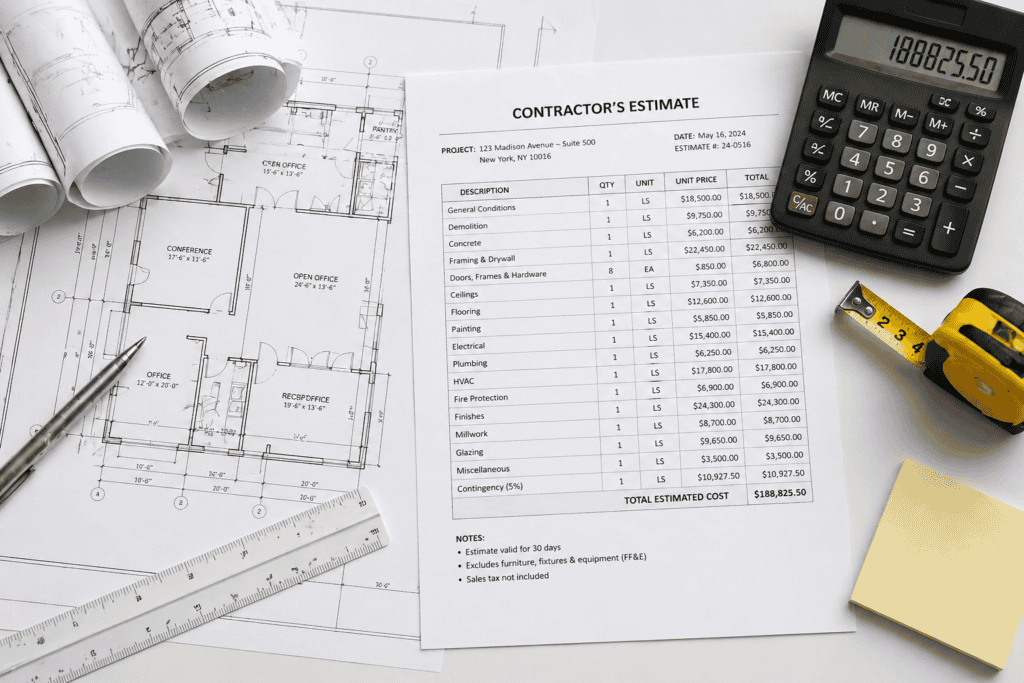
Not all buildouts are the same — scope defines cost and timeline.
Tenant improvements range from cosmetic upgrades to full gut renovations, with timelines from days to months depending on complexity.
Buildout Types:
Cosmetic Improvements
- Paint, flooring, fixtures
- Low cost, fast timeline
Partial Buildout
- Layout changes, MEP upgrades
- Moderate cost and timeline
Full Buildout
- Complete renovation
- High cost, long timeline
Restaurant Buildout
- Most complex
- Requires multiple agency approvals
Tenant Improvement Timeline NYC (Realistic Breakdown)
Timeline is one of the most underestimated factors.
Most NYC tenant improvement projects take 3–7 months, while restaurant buildouts can take 5–10 months due to permits, inspections, and complexity.
Timeline Breakdown:
| Phase | Duration |
| Lease signing | 2–8 weeks |
| Design + drawings | 3–6 weeks |
| DOB permits | 4–12 weeks |
| Construction | 2–4 months |
| Final inspections | 1–3 weeks |
⚠️ Many delays happen due to poor planning and sequencing.
👉 Avoid issues: commercial buildout mistakes
If you want a full phase-by-phase breakdown from lease to opening:
👉 Read: buildout timeline NYC
Negotiating Tenant Improvements in NYC
Negotiation determines your financial success.
Strong TI negotiations can reduce upfront costs, improve cash flow, and protect you from delays through better lease terms.
What to Negotiate:
| Term | Strategy |
| TI allowance | Match real buildout cost |
| Free rent | Cover construction period |
| Payment structure | Milestone reimbursements |
| Contractor approval | Fast approval timelines |
| Ownership | Clarify end-of-lease terms |
💡 Always get a contractor estimate before negotiating.
Common Tenant Improvement Mistakes NYC Businesses Make
Most mistakes happen before construction even begins.
The biggest TI mistakes include underestimating costs, ignoring permit timelines, hiring inexperienced contractors, and signing leases without proper planning.
Top Mistakes:
- Signing lease before cost estimate
- Underestimating DOB timelines
- Hiring non-NYC experienced contractors
- Misunderstanding TI coverage
- No contingency budget
Many NYC business owners repeat the same errors.
👉 See full guide: commercial buildout mistakes
Work With Built by Bob for Your NYC Buildout
Built by Bob helps business owners manage tenant improvements from lease to opening.
Built by Bob provides full-service tenant improvement solutions including design, permitting, construction, and project management across NYC.
Services Include:
- Franchise buildouts
- Restaurant construction
- Retail and office buildouts
- DOB permit management
📞 Call: (347) 201-5018
🌐 Visit: builtbybob.net
Frequently Asked Questions
What is the difference between tenant improvements and a buildout?
Tenant improvements and buildouts refer to the same overall work, but from different perspectives. Tenant improvement is the real estate term used in leases, while buildout is the construction term used by contractors. Both describe customizing a commercial space for a specific business.
In practice, they mean the same thing. Your lease will say “tenant improvements” or “leasehold improvements,” while your contractor will refer to the buildout process.
How much TI allowance should I negotiate in NYC?
The right TI allowance depends on your actual buildout cost, not a generic range. In NYC, allowances typically range from $30–$80/sf for basic spaces and $80–$150/sf for more complex buildouts.
For restaurants and kitchens, costs often exceed $200+/sf, so negotiate as aggressively as possible. Always start with a real contractor estimate before finalizing your lease.
Who owns the tenant improvements at the end of the lease?
In most NYC leases, tenant improvements become the landlord’s property at the end of the lease. This means you typically cannot remove or reuse what you built.
However, some leases require you to remove specific improvements and restore the space, especially for restaurants or custom installations. Always review and negotiate restoration clauses before signing.
Do tenant improvements affect my rent?
Tenant improvements don’t directly change your rent, but they impact your total cost. Landlords usually recover their TI contribution by slightly increasing rent or requiring longer lease terms.
This creates a trade-off:
- Higher TI allowance → higher rent
- Lower TI allowance → lower rent
Understanding this helps you choose the best long-term financial structure for your business.
Can I hire my own contractor for tenant improvements in NYC?
Yes, in most NYC leases you can hire your own contractor, but landlord approval is required. Landlords typically review insurance, licensing, and experience before approving.
Some buildings have preferred contractor lists, but you are not always required to use them. Working with a contractor experienced in NYC DOB permits and approvals is critical to avoid delays.
What happens if my tenant improvement costs exceed the TI allowance?
You are responsible for any costs above the TI allowance. This is one of the most common surprises for NYC business owners.
The solution is simple:
- Get a detailed buildout estimate before signing
- Compare it against the landlord’s TI offer
Once the lease is signed, your negotiating leverage is significantly reduced.
How do I protect myself if the landlord delays TI reimbursement?
Protect yourself by clearly defining reimbursement terms in your lease. Specify timelines, documentation requirements, and payment structure before signing.
For example:
“Landlord shall reimburse within 30 days of receiving a complete draw request.”
Also define what qualifies as a complete submission (invoices, lien waivers, approvals). This gives you legal leverage if delays occur.