
Closing your restaurant for a renovation can destroy cash flow fast. In New York City, where monthly rent alone can exceed $10,000, even a short shutdown can put serious pressure on your business.
The reality is simple. Most NYC restaurant renovations can be completed while you stay partially or fully open. The key is having the right contractor, the right phasing strategy, and a schedule built around your service hours instead of the contractor’s convenience.
At Built by Bob, we help NYC restaurant owners renovate while protecting operations, customer experience, and revenue.
Can You Renovate Your NYC Restaurant Without Shutting Down?
Not every type of renovation can happen during active service. The safest approach is to break the project into phases and schedule disruptive work around your operating hours.
Restaurants across NYC renovate successfully while staying open every day. The difference between a smooth project and a disaster usually comes down to planning, sequencing, and contractor experience.
Work You Can Usually Complete While Staying Open
- Update dining rooms with paint, lighting swaps, or booth reupholstery
- Replace bar millwork and fixtures during overnight hours
- Install flooring in sections while rotating seating areas
- Complete exterior and facade work with minimal operational impact
- Upgrade back-of-house equipment during non-service windows
Work That Usually Requires Partial or Full Closure
- Full kitchen demolition and rebuilds
- HVAC replacement or rerouting
- Major plumbing changes, including drains, supply lines, or grease traps
- Electrical panel upgrades
- Structural modifications, including wall removal or slab work
The goal is simple: isolate disruptive work to controlled areas and controlled hours, never your entire restaurant at once.
Why Restaurant Renovations in NYC Get Complicated Fast
Restaurant renovations in New York City involve more than construction. You also have to manage permits, inspections, fire code compliance, and landlord requirements.
If you miss one step, your project can stop immediately.
NYC DOB Permit Requirements
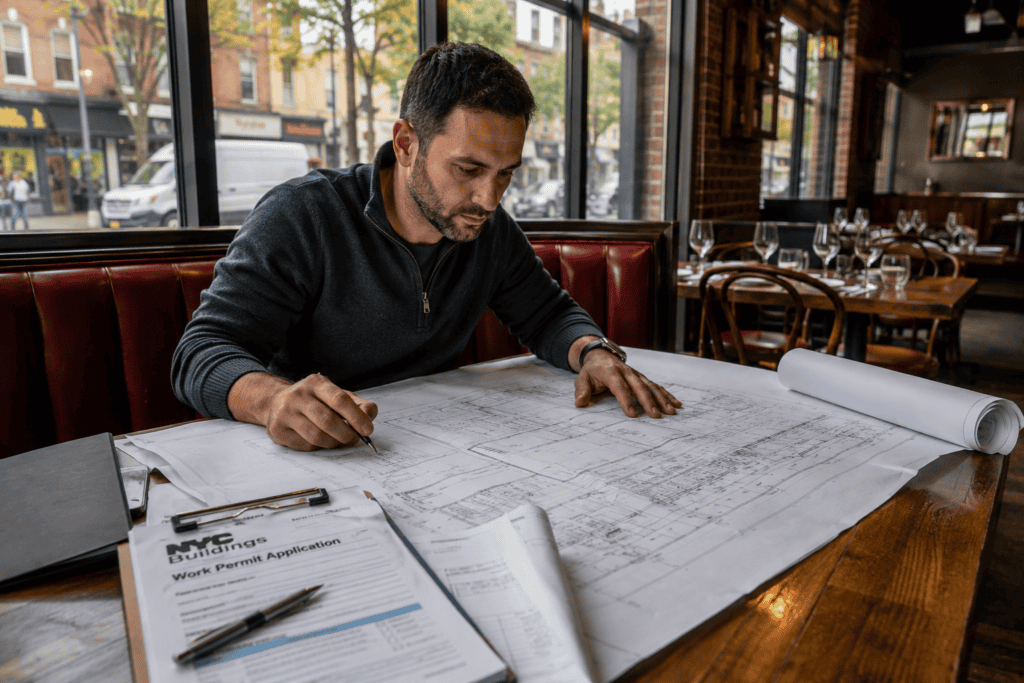
Any renovation involving electrical, plumbing, HVAC, or structural work requires filings with the NYC Department of Buildings.
Permit approvals typically take 4–8 weeks. Starting work without permits can trigger a Stop Work Order, which can shut your renovation down mid-project.
NYC Health Department Requirements
If your renovation affects the kitchen or food prep areas, the NYC Department of Health & Mental Hygiene may require inspections before those spaces reopen.
Even partial kitchen renovations should be reviewed with your contractor before work starts.
FDNY Approval Requirements
Changes involving:
- Hood exhaust systems
- Fire suppression
- Sprinklers
often require separate approval from the FDNY in addition to DOB filings.
This is one of the most common delay points in NYC restaurant renovations.
Landlord and Building Management Approval
Many NYC landlords require advance notice and written approval before renovation work begins.
Review your lease carefully before signing a construction contract.
Use a Phased Renovation Plan to Keep Revenue Flowing
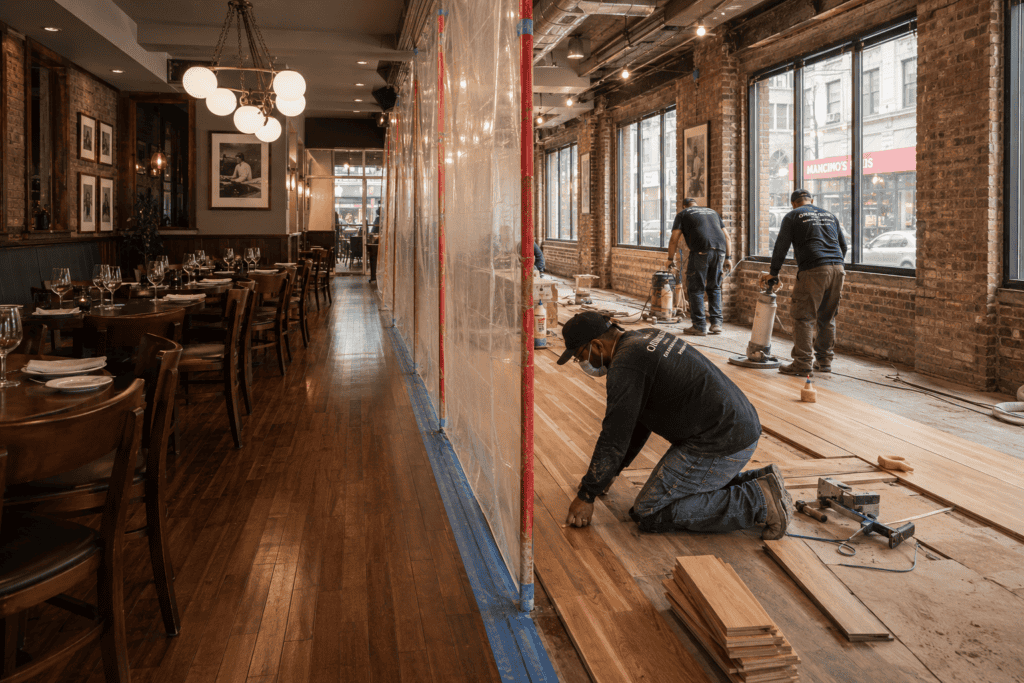
A phased renovation strategy allows you to renovate one area at a time instead of gutting the entire restaurant at once.
This approach keeps part of your operation active while construction moves through controlled zones.
For a deeper breakdown of phased commercial construction, read our guide to commercial buildouts in NYC.
How to Phase Your Dining Room Renovation
| Phase | Area | Work | Impact on Service |
|---|---|---|---|
| Phase 1 | Section A (25% of dining) | New flooring, lighting, seating | Reduce covers temporarily |
| Phase 2 | Section B (25% of dining) | Same scope as Phase 1 | Rotate to restored Section A |
| Phase 3 | Section C | Bar millwork, back bar refresh | Bar service limited 1–2 weeks |
| Phase 4 | Section D + entrance | Entry refresh, host stand, signage | Minimal impact |
How to Phase a Kitchen Renovation Without Closing
Kitchen renovations are more difficult to phase, but many projects can still stay operational with the right sequencing.
Replace Equipment One Piece at a Time
Swap:
- Ranges
- Fryers
- Refrigeration equipment
during off-hours whenever possible.
Like-for-like equipment replacements often do not require permits.
Schedule Non-Structural Work Overnight
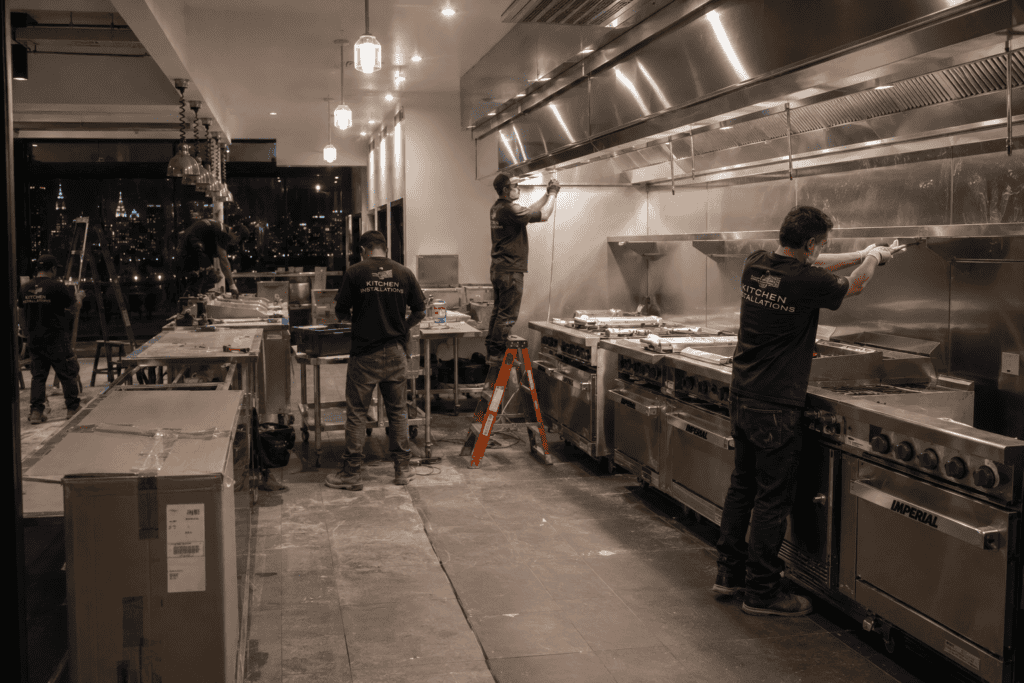
Complete:
- Tile installation
- Wall panels
- Shelving
- Hood cleaning
during your restaurant’s closed hours.
For many dinner-focused restaurants, that means working between 11PM–6AM.
Isolate Plumbing and Electrical Work by Zone
Keep the primary cooking line operational while crews work on:
- Prep stations
- Utility zones
- Secondary work areas
Treat Full Kitchen Guts as a Last Resort
If a full rebuild is unavoidable, schedule it during your slowest season and compress the work into an accelerated 2–3 week construction sprint.
Schedule Construction Around Your Service Hours
Your contractor should understand restaurant operations as well as construction logistics.
Before any work begins, your service schedule should dictate the construction schedule, not the other way around.
Best Construction Windows for NYC Restaurants
| Your Business Type | Dead Hours Available | Best Construction Window |
|---|---|---|
| Dinner-only (opens 5PM) | 12AM–12PM | 6AM–2PM with cleanup by 3PM |
| Lunch + Dinner (opens 11:30AM) | 10PM–9AM | 11PM–8AM with cleanup by 9:30AM |
| Breakfast + Lunch (closes 4PM) | 5PM–6AM | 5PM–11PM |
| 24-hour operation | Limited, phase-only approach | Rolling zone phases, no full shutdowns |
Rules That Keep Construction From Disrupting Service
- Stop demolition during service hours
- Clear all crews out at least 30 minutes before opening
- Flush HVAC systems to remove dust before guests arrive
- Install sealed temporary barriers between construction and dining zones
- Perform daily walkthroughs with management and the site supervisor
Small operational mistakes become customer experience problems fast. Discipline matters.
Handle NYC Permits Before Construction Starts
Permits are often the biggest variable in a stay-open renovation.
Poor permit timing can leave you partially demolished, partially operational, and unable to continue construction.
For a detailed overview of approvals and filings, review our guide to the NYC DOB permit process.
File Permits Before Demo Begins
Do not start demolition first and file later.
Use the 4–8 week DOB approval window for:
- Material ordering
- Crew scheduling
- Site protection prep
- Construction logistics planning
Scope Your Permit Filing Correctly
Overfiling creates unnecessary review delays.
Underfiling creates compliance risk and can trigger a Stop Work Order.
Your contractor should understand:
- ALT1 filings
- ALT2 filings
- What scope changes trigger each type
Use a NYC Expediter
For projects requiring plan examination, an experienced NYC expediter can significantly reduce approval time.
Built by Bob works with expediters familiar with DOB examiners and restaurant renovation filings.
Notify the NYC Health Department Early
If your renovation affects:
- Kitchens
- Plumbing
- Food prep areas
notify the NYC Department of Health before work begins.
Failing to notify them early can lead to inspection delays or temporary shutdowns later.
Protect Your Revenue While Construction Is Happening
Construction affects the customer experience whether you plan for it or not.
The smartest restaurant owners manage guest expectations before problems start.
Reduce Seating Instead of Closing Entire Sections
A smaller dining room is usually better than a full shutdown.
Reducing covers temporarily:
- Keeps cash flow moving
- Helps staff maintain operations
- Creates a calmer guest experience
Communicate Renovations Clearly to Customers
NYC diners understand renovations when communication is proactive.
Update:
- Your Google Business Profile
- Email list
- Social media
- In-store signage
Position the renovation as an improvement, not a disruption.
Simplify Your Menu During Equipment Swaps
If part of the kitchen is temporarily offline, reduce operational stress by simplifying your menu.
Focus on:
- Best-selling items
- High-margin dishes
- Menu items unaffected by construction
Reopen Sections Strategically
As completed areas reopen:
- Share before-and-after photos
- Highlight upgrades
- Create small promotional pushes
This helps generate excitement instead of frustration.
Protect Your Online Reviews
Construction noise and delays can hurt:
- Yelp ratings
- Google reviews
- Repeat business
Train staff to proactively explain the renovation and resolve service issues quickly when needed.
Choose a Contractor Who Understands Active Restaurants
Stay-open renovations require a different level of discipline than standard commercial construction.
Your contractor must manage:
- Tight schedules
- Overnight crews
- Daily cleanup
- Customer-facing environments
- Ongoing restaurant operations
What You Should Look For
- Experience renovating active restaurants
- Night and weekend crew availability
- Daily on-site project management
- In-house permit coordination
- Knowledge of NYC DOB, FDNY, and Health Department requirements
Questions Every NYC Restaurant Owner Should Ask
- Have you renovated restaurants that stayed open during construction?
- Can I speak directly with those restaurant owners?
- Who manages my project day-to-day?
- How do you handle permits and expediting?
- What happens if delays threaten my opening hours?
- What is your daily cleanup protocol?
Built by Bob has completed active-operation restaurant renovations across all five NYC boroughs, from Manhattan bar rebuilds to Queens dining room refreshes.
Call (347) 201-5018 or visit Built by Bob to discuss your renovation scope and phased construction plan.
Compare the Real Cost of Closing vs. Staying Open
Most restaurant owners focus only on construction cost.
The bigger financial risk is usually lost revenue.
| Scenario | Closure Duration | Estimated Revenue Loss | Added Construction Cost | Net Difference |
|---|---|---|---|---|
| Full closure, dining room reno | 4 weeks | $40,000–$120,000 | $0 | -$40K to -$120K |
| Phased stay-open, dining room | 0 weeks closed | $5,000–$15,000 (reduced covers) | +$8,000–$20,000 (night crews) | Net savings: $20K–$100K |
| Full closure, kitchen rebuild | 3 weeks | $30,000–$90,000 | $0 | -$30K to -$90K |
| Accelerated off-hours kitchen | 0–1 week closed | $5,000–$20,000 | +$10,000–$25,000 (premium labor) | Net savings: $15K–$65K |
In most cases, paying for phased work and night crews costs less than shutting down completely.
You can also review our breakdown of restaurant renovation costs in NYC for more budgeting insight.
What a Stay-Open Restaurant Renovation Timeline Looks Like
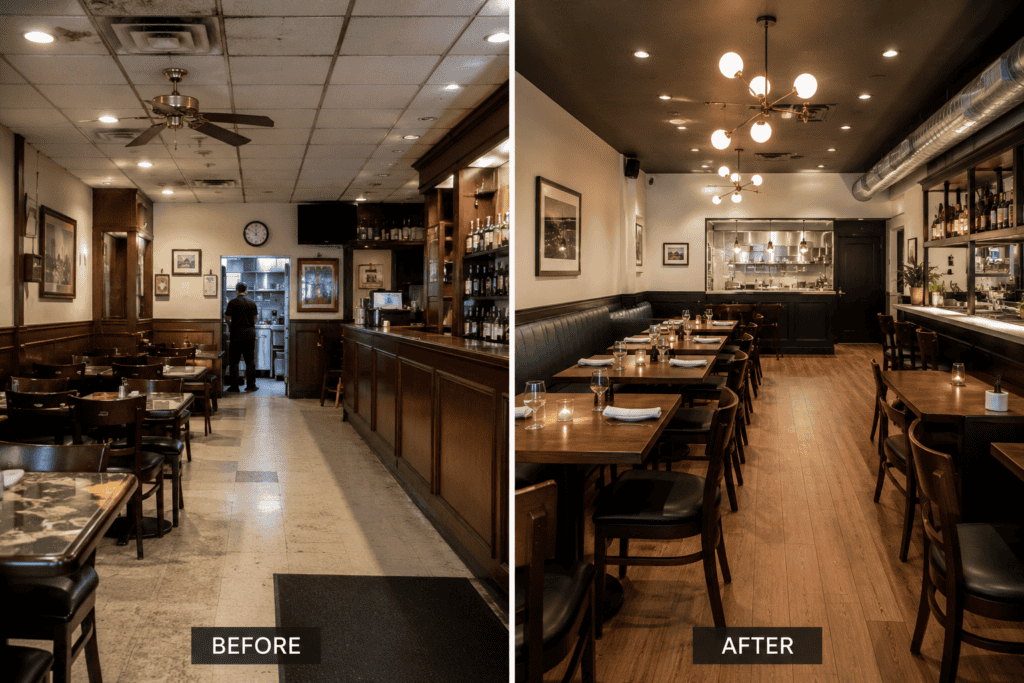
A phased renovation only works when sequencing is tight and every phase has clear operational boundaries.
For additional scheduling insights, see our guide on the restaurant renovation timeline in NYC.
| Week | Activity | Impact on Restaurant |
|---|---|---|
| Weeks 1–4 | Permit filing + material ordering | None, restaurant fully open |
| Week 5 | Site protection installation, sealed barriers | Minor, setup during off-hours |
| Weeks 5–7 | Phase 1 dining zone, flooring + lighting | Reduced covers in that zone |
| Weeks 7–9 | Phase 2 dining zone | Rotate back to completed Phase 1 |
| Weeks 9–11 | Bar refresh + millwork | Bar limited during off-hours work |
| Weeks 11–13 | Kitchen equipment swaps (off-hours) | No dining impact; kitchen fully operational during service |
| Week 14 | Punch list, NYC inspections | Minimal |
| Week 15 | Soft reopening, full capacity | Renovation complete |
Avoid the Mistakes That Force Restaurants to Shut Down Mid-Project
Most forced closures happen because of preventable planning mistakes.
1. Starting Construction Before Permits Are Approved
This is the fastest way to trigger a DOB Stop Work Order.
If demolition starts before approvals are finalized, you can end up:
- Partially demolished
- Closed unexpectedly
- Paying idle labor costs
Always secure permits first.
2. Hiring a Contractor Without Restaurant Experience
Restaurant operations require precision.
An inexperienced contractor may:
- Leave debris in customer areas
- Miss cleanup deadlines
- Schedule loud demo during service hours
Check references carefully.
3. Underestimating Dust and Noise
Even one day of uncontrolled grinding or demolition can damage the dining experience.
Protect your operation with:
- Dust barriers
- Air filtration
- Off-hours noisy work
- Daily cleanup procedures
4. Leaving No Buffer in the Schedule
NYC construction delays happen constantly.
Build at least 2 weeks of contingency time into your project schedule to avoid getting stuck in partial construction mode indefinitely.
5. Failing to Notify the NYC Health Department
If your renovation triggers an inspection and you’re unprepared, the DOH can temporarily shut down food service operations.
Stay ahead of inspections before construction starts.
Frequently Asked Questions
Can I renovate my NYC restaurant while staying open?
Yes. Most restaurant renovations can be completed with the restaurant partially or fully open by using a phased approach, completing one section at a time and scheduling disruptive work during off-hours. The key is hiring a contractor experienced with active-operation renovations and getting permits in place before work begins.
Do I need NYC DOB permits to renovate a restaurant?
Yes, in most cases. Any renovation that touches electrical systems, plumbing, HVAC, fire suppression, or structural elements requires NYC Department of Buildings permit filings. Cosmetic work, paint, furniture, and lighting fixture swaps typically do not. A qualified contractor will confirm exactly what requires filing before construction begins.
How long does a restaurant renovation take in NYC?
A phased, stay-open restaurant renovation typically takes 10–16 weeks including permit approval time (4–8 weeks) and construction (6–10 weeks). A full kitchen gut rebuild done off-hours can take 3–5 weeks of active construction. Timelines depend heavily on scope, permit complexity, and material lead times.
Does the NYC Health Department need to know about my renovation?
Yes. If your renovation affects the kitchen, food prep areas, or plumbing, you should notify the NYC Department of Health & Mental Hygiene in advance. Failing to do so can result in an unexpected inspection that shuts down food service temporarily. Built by Bob handles this notification process as part of the project.
What is the biggest risk of renovating a restaurant while staying open?
The biggest risk is a NYC DOB Stop Work Order due to unpermitted work. The second biggest risk is noise and dust affecting the dining experience enough to hurt reviews and revenue. Both risks are manageable with the right contractor, proper permits, and a solid site protection plan.
How much does a restaurant renovation cost in NYC while staying open?
Staying open typically adds 10–20% to construction costs due to night-crew premiums, phased sequencing, and additional site protection requirements. However, this premium is almost always less than the revenue lost from a full closure. A 1,500 sq ft dining room renovation in NYC typically runs $120,000–$280,000 depending on scope and finish level.
How do I find a contractor experienced in stay-open restaurant renovations in NYC?
Ask specifically for references from restaurant clients who renovated while remaining open. Verify that the contractor handles NYC DOB permit filings in-house, has experience with FDNY and Health Department requirements, and has a dedicated project manager for your job. Built by Bob specializes in this work across all five NYC boroughs. Contact us at (347) 201-5018.
Should I reduce my menu during a restaurant renovation?
Yes. Temporarily simplifying your menu during the phases that affect your kitchen reduces operational stress, food waste, and the chance of service failures. Focus on your best-selling dishes that do not depend on the equipment or areas currently under construction.